
Tesla vs Ford EVs: Which Electric Car Is Worth Your Money in 2026?
-
June 04 , 2026
-
38
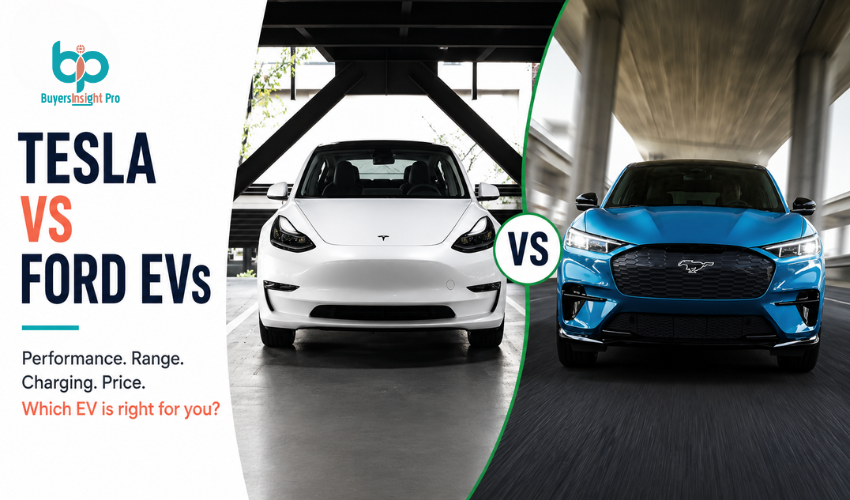
The Tesla vs Ford EV debate in 2026 has become one of the most important comparisons in the electric vehicle market. What was once a Tesla-dominated space is now a real competition, with Ford emerging strongly through models like the Mustang Mach-E.
In 2026, choosing between Tesla and Ford is no longer just about range or price. It’s about charging convenience, driving experience, software ecosystem, and long-term ownership value. So the real question is simple: which electric SUV is actually worth your money in 2026?
Let’s break it down in detail.
Best Offers Right Now (Quick Overview)
Tesla deals in 2026 are usually tied to financing plans, software upgrades, and occasional price adjustments depending on region and model variant. The Model Y remains the most commonly discounted Tesla through trade-ins or delivery incentives. Ford EVs, especially the Mustang Mach-E, often see more frequent promotional pricing, dealer discounts and seasonal offers. This makes Ford slightly more accessible in terms of upfront cost. Tesla focuses on long-term value and ecosystem strength, while Ford focuses on affordability and driving comfort.
Tesla vs Ford EVs: Overview
Tesla and Ford approach electric mobility very differently. Tesla builds EVs around efficiency, software, and a connected ecosystem. Everything is designed to feel futuristic and integrated. Ford takes a more traditional automotive approach, blending electric power with familiar driving controls and usability.
In simple terms:
Tesla is a tech-first EV brand, while Ford is a car-first EV brand.
Performance and Driving Experience
Tesla vehicles are known for instant acceleration and smooth power delivery. The Model Y delivers quick 0–60 mph performance and feels extremely responsive in city and highway driving. Ford EVs like the Mustang Mach-E also deliver strong performance, but with a slightly more engaging and mechanical driving feel. Steering feedback is more natural, which many drivers prefer. Tesla feels faster and more futuristic, while Ford feels more connected and traditional.
Best Offer (Performance Value)
Tesla delivers superior acceleration and efficiency, while Ford offers a more engaging driving experience.
Range and Charging Infrastructure
This is where Tesla still maintains a clear advantage. Tesla offers strong real-world range along with its Supercharger network, which remains one of the most reliable and widely available charging systems in 2026. Ford EVs offer competitive range, but rely on third-party charging networks, which can vary in speed and availability depending on location. For long-distance travel, Tesla still leads due to charging convenience.
Best Offer (Charging Value)
Tesla provides a more reliable and faster charging ecosystem, while Ford offers standard but less consistent charging support.
Interior, Comfort and Usability
Tesla interiors are minimalistic, with almost all functions controlled through a central touchscreen. This creates a clean but sometimes unconventional driving experience. Ford takes a more traditional approach, combining physical controls with a modern infotainment system. Many users find this easier and more comfortable for daily driving. Ford feels more familiar, while Tesla feels more futuristic.
Best Offer (Comfort Value)
Ford offers better everyday usability, while Tesla focuses on a minimalist and tech-driven cabin design.
Technology and Software
Tesla leads significantly in software innovation. Features like over-the-air updates, advanced driver assistance, and a fast, responsive interface make the experience feel highly advanced. Ford uses the Sync system along with Apple CarPlay and Android Auto support, which many users prefer for compatibility and familiarity. Tesla feels like a software-first platform, while Ford feels like a traditional car with modern tech.
Best Offer (Technology Value)
Tesla leads in advanced software and AI features, while Ford offers better smartphone integration and usability.
Pricing and Value for Money
Ford EVs generally start at a lower price point compared to Tesla, making them more accessible for many buyers. Tesla, however, tends to hold better resale value and offers stronger long-term efficiency. In short, Ford is more affordable upfront, while Tesla offers stronger long-term value retention.
Best Offer (Pricing Value)
Ford provides better entry pricing, while Tesla delivers stronger long-term resale value.
Real User Feedback
Real-world feedback shows a clear split between the two. Tesla users often highlight range efficiency, charging convenience and software experience. Ford users frequently praise comfort, driving feel and ease of use. Many discussions suggest that Tesla is better for EV technology, while Ford feels better as a traditional driving experience with electric power.
Pros and Cons
| Category | Tesla EVs | Ford EVs |
| Range & Efficiency | Excellent | Strong but slightly lower |
| Charging Network | Industry-leading | Third-party dependent |
| Driving Feel | Fast & smooth | More engaging |
| Interior | Minimalist | Traditional & practical |
| Software | Highly advanced | Basic but user-friendly |
Who Should Choose What?
Tesla is best for drivers who want cutting-edge EV technology, strong charging infrastructure, and maximum efficiency for long-distance travel. Ford is better for drivers who want a more traditional driving experience, better interior usability, and a lower upfront cost.
Final Verdict
In 2026, the Tesla vs Ford EV comparison does not have a single universal winner. Tesla remains stronger in technology, efficiency, and charging infrastructure. Ford offers better comfort, usability, and value in certain trims. If you want the most advanced EV experience, Tesla is still the better choice. If you prefer a more practical and familiar driving experience, Ford is highly competitive. Ultimately, Tesla is the better overall EV platform, while Ford is the more traditional and comfortable electric SUV option.
Best Offers Reminder (Final Summary)
Tesla deals focus more on long-term value through financing, trade-ins and ecosystem benefits. Ford offers more frequent discounts and better upfront affordability. Tesla is technology-driven. Ford is value-driven.
FAQs
Is Tesla still better than Ford EVs in 2026?
Yes, Tesla leads in charging, software, and efficiency, but Ford is very competitive.
Which EV has better range?
Tesla generally offers slightly better range and efficiency.
Is Ford Mach-E cheaper than Tesla Model Y?
Yes, Ford often has a lower starting price.
Which is better for long road trips?
Tesla, due to its Supercharger network.
Which should I buy in 2026?
Choose Tesla for technology and charging convenience. Choose Ford for comfort and affordability.
Can I write you?
Sign up to get my weekly newsletter.
Trending Stories





Best Seller