ENGWE Review 2026: Engine Pro 2.0, M20 & Buying Advice
-
October 09 , 2026
-
38
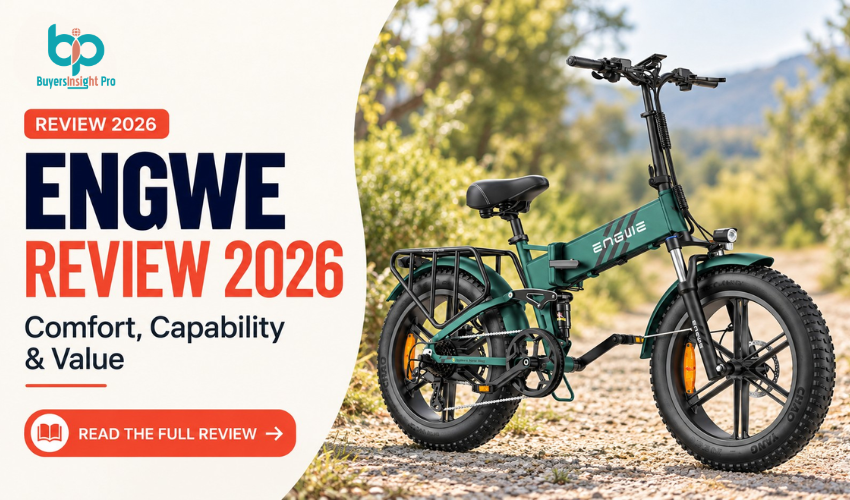
ENGWE Review 2026: Are Its Folding and Fat Tire Electric Bikes Worth Buying?
An electric bike can look like exceptional value until you try lifting it into a car, arranging a repair, or riding home with a nearly empty battery. That is the buying decision this ENGWE review examines. The brand offers plenty of equipment for the money, particularly for shoppers interested in fat tires, suspension, and substantial battery capacity. However, an impressive specification sheet does not tell you whether a bike suits your commute, storage space, or riding style.
The Engine Pro 2.0 and original M20 illustrate those trade-offs particularly well. One is a folding bicycle with a more pedal-focused specification. The other puts moped-inspired styling and relaxed recreational appeal first. We’ll compare their features, explain the practical compromises, examine published customer feedback, and consider alternatives from Lectric and Fiido.
What Is ENGWE?
ENGWE sells electric bicycles across several categories, including folding, commuter, cargo, and moped-style models. Its own company history describes a business developed around making electric cycling accessible and affordable. Its strongest appeal is the amount of equipment buyers can obtain without entering premium bicycle pricing. That does not make every ENGWE interchangeable. A compact commuter, a heavy folding fat bike, and a long-seat recreational model solve different problems.
This article focuses on the Engine Pro 2.0 and original M20. Specifications from the M20 2.0 or M20 3.0 should not be applied to the original bike. Likewise, the Engine Pro 2.0 should not be confused with the newer Engine Pro 3.0 Boost. Regional versions also matter. During research, engwe.com displayed European pricing and specifications, while the US store listed different performance figures.
ENGWE Engine Pro 2.0 Review: The More Versatile Option
The European listing identifies a folding frame, torque sensor, hydraulic brakes, full suspension, and an eight-speed Shimano drivetrain. It also lists 75Nm of torque and a bicycle weight of 31.6kg. That combination makes the Engine Pro 2.0 the stronger candidate for riders who want to pedal regularly while retaining the comfort-oriented fat-bike format.
The torque sensor is the feature I would prioritize over a dramatic peak-power claim. In general, torque sensing allows assistance to respond to pedaling effort. That creates the potential for a more connected riding experience, although the controller’s tuning still determines how well it works.
Hydraulic braking is another meaningful specification. It is worth considering when comparing similarly priced heavy bikes, even though the presence of hydraulic brakes alone does not establish stopping distance or brake quality. The compromise is obvious: this is a substantial bicycle. Its folding mechanism helps with storage dimensions, but it does not make the bike light.
ENGWE M20 Review: Style Comes With Practical Trade-Offs
The original M20 combines a long seat, moped-inspired frame layout, full suspension, and 20 × 4-inch tires. The European page lists mechanical disc brakes, seven-speed gearing, and single- or dual-battery configurations. Its appeal is easy to understand. It looks different from a conventional bicycle and offers a format aimed at relaxed, comfort-oriented riding. However, the long-seat layout makes fit particularly important. Shoppers accustomed to adjusting a conventional saddle for efficient pedaling should assess whether the riding position works for their legs and intended journeys.
The listed bicycle weight is 34.8kg, while the specification does not clearly separate the riding weights of both battery configurations. Do not mistake the higher shipping weights for bicycle weights. Choose the M20 because you want this particular format. If folding, easier lifting, or efficient pedaling dominates your priorities, investigate another model first.
Key Features: What Matters Beyond the Sales Page
Fat Tires Offer a Different Kind of Ride
Wide tires are central to the appeal of both bikes. Their larger air volume can help soften surface imperfections when pressure is appropriate for the rider and conditions. They also introduce compromises. A larger tire is not automatically faster, more efficient, or easier to maintain. Tread, pressure, casing, and overall bicycle weight all affect the experience. For a buyer crossing rough pavement or maintained gravel paths, comfort may justify those compromises. For someone riding exclusively on smooth streets, narrower tires may be a more practical choice. The best fat tire electric bike reviews should consider that distinction rather than treating tire width as a universal upgrade.
Suspension Needs Context
Both bikes are presented with full suspension. That means suspension at the front and rear, rather than only a suspension fork. It is a promising specification for comfort, but component quality and setup still matter. “Full suspension” does not establish suitability for jumps, aggressive trails, or technical mountain biking. Buyers should distinguish recreational rough-surface capability from a specialist mountain bike’s intended use. Marketing photography cannot settle that question.
Folding Helps Storage More Than Carrying
A folding frame is useful when a bike must fit into a vehicle or occupy less floor space. It is less helpful when the main obstacle is a flight of stairs. The US Engine Pro 2.0 page lists folded dimensions of approximately 104 × 55 × 84cm. Measure your available space rather than assuming any folding bike will fit. A practical check includes the opening through which the bike must pass, the space around it, and whether you can lift or maneuver it safely.
Battery Capacity Is More Useful Than a Maximum-Range Headline
Battery capacity describes stored energy. Range describes what a bike achieved or is claimed to achieve under particular conditions. The original M20 lists a 48V 13Ah battery, with a two-battery option using two packs of that specification. That corresponds to approximately 624Wh per battery, calculated by multiplying voltage by amp-hours. A second battery provides more available energy, but also adds cost and weight. It does not make a long journey effortless or guarantee the advertised distance. Consider the route you need to complete with a reserve, rather than the largest number printed on a product page.
Regional Specifications Require a Careful Read
The European Engine Pro 2.0 page lists assistance speed at 25km/h. The US listing identifies a 750W rated motor, 1,200W peak output, and different throttle and pedal-assist speed figures. These are separate regional listings, not one universal specification. For public-road use, confirm the exact version’s compliance where you live. For example, UK EAPC rules require a maximum continuous rated motor output of 250W and assistance cutting off at 15.5mph, alongside other requirements. A speed limit alone does not establish compliance.
First Impressions: Design, Delivery, and Assembly
ENGWE’s designs have a clear visual identity. The Engine Pro 2.0 looks like a compact utility bicycle with oversized tires; the M20 has a much stronger motorcycle-inspired appearance. Neither gives the impression of a bike designed primarily around frequent carrying. Buyers should take that visual bulk seriously. This review did not include an inspected delivery, so it cannot judge packaging protection or the condition of a particular shipment. The official listings describe included chargers, assembly tools, pedals, and documentation, but the selected order determines what arrives.
Expect a setup process rather than a ride straight from the carton. Follow the model’s instructions for assembly and adjustments, and obtain professional help if you cannot confidently check the installation. ENGWE publishes manuals for both models. Read yours before assembly, particularly where it specifies fastener settings, folding mechanisms, battery handling, and maintenance. Keep the box until you are satisfied with the purchase. Returning a heavy bicycle is considerably more complicated without its original packaging.
Performance and Real-World Use: What You Can Reasonably Expect
Everyday Comfort Is the Main Attraction
From their designs, both bikes prioritize a cushioned, substantial ride over minimal weight. That is a reasonable match for riders who value comfort on imperfect surfaces. It may be less appealing to someone who wants the lively handling and easy maneuvering of a lighter bicycle. The Engine Pro 2.0’s specification suggests the better fit for mixed errands and regular pedaling. The M20’s layout makes more sense when its seating position and styling are central to the purchase. These are suitability judgments based on construction and equipment, not reported road-test impressions.
Hill Performance Cannot Be Reduced to Watts
Motor output helps, but a hill-climbing result also depends on rider weight, gearing, speed, battery condition, and the length of the climb. A short incline and a prolonged steep ascent are different tasks. For buyers with demanding hills, look for testing of the exact regional model on comparable terrain. Neither advertised torque nor a generic “climbing angle” should be treated as a guarantee. A hub-driven fat bike may be entirely adequate for your route. It is still worth comparing a suitable mid-drive bicycle if sustained steep climbing is your main requirement.
Plan Range Around Your Route
Maximum-range figures are best treated as conditional claims. For the US Engine Pro 2.0, ENGWE lists up to 30 miles in throttle mode and 68 miles with pedal assistance. Those figures are manufacturer claims, not measurements from this review. Expect your result to change with speed, assistance level, temperature, terrain, and how much you pedal. A useful first-week routine is to record distance and remaining charge on your own route. Build confidence with shorter journeys before depending on the bike for a trip near its claimed maximum.
Ownership Includes Ordinary Bicycle Maintenance
Electrical assistance does not remove the need to maintain tires, brakes, gears, bearings, and fasteners. Heavy bicycles can also be awkward to inspect or transport when something goes wrong. Before buying, identify a workshop willing to service the model and clarify how electrical warranty issues will be handled. That preparation matters especially if the bicycle will replace your main daily transport. A good purchase needs a workable repair plan as well as an appealing ride.
Pricing and Value: Is ENGWE Worth It?
Prices below are storefront snapshots checked on October 9, 2026. Currencies and regional versions are deliberately kept separate.
| Bike and storefront | Displayed price | Important qualification |
| Engine Pro 2.0 — European engwe.com listing | €1,399 | Confirm selected color and current availability |
| Original M20 — European engwe.com listing | From €1,099 | Battery configuration affects the order |
| Engine Pro 2.0 — US store | $1,699 | Listed out of stock when checked |
| Lectric XP4 500W — US store | $999 | Base configuration |
| Fiido M1 Pro — dollar-priced page | $1,209 | Confirm destination and selected version |
Sources: official purchasing pages. At the displayed European starting prices, the Engine Pro 2.0 costs €300 more than the original M20. That premium looks more defensible for someone who wants the folding format and pedal-focused specification. The M20’s lower starting price is attractive only if its size and riding position suit the buyer. The complete cost includes delivery, assembly assistance, security, maintenance, and any accessories you actually need. A second battery should solve a real range problem rather than simply make the order look more impressive.
Warranty and Returns Affect the Value
The engwe.com warranty table lists 12 months for several core components, including the frame, motor, battery, and specified electronics, with shorter periods for other parts. The policy also excludes various damage and wear scenarios. Read the applicable regional terms rather than assuming blanket coverage.
Its return policy allows requests within 30 days, subject to condition, packaging, and documentation requirements. It specifies less than 10km on the display for eligible lightly used bikes and lists a €200 charge for non-quality-related bike returns, with restocking deductions also mentioned. These are published seller terms, not a determination of statutory consumer rights. Confirm the terms applying to your order before using a purchase as an extended trial.
ENGWE Pros and Cons
| Pros | Cons |
| Appealing equipment for the price | Substantial weight limits carrying convenience |
| Choice of folding and moped-style formats | Model generations and regional versions can be confusing |
| Engine Pro 2.0 offers a versatile specification | Advertised range is conditional |
| Original M20 offers a dual-battery option | Long-seat fit needs careful assessment |
| Official manuals and parts support pathways | Returns and repair logistics can be inconvenient |
Who Should Buy ENGWE?
ENGWE makes the most sense for riders with ground-level storage or manageable access, a suitable route, and an interest in the brand’s comfort-oriented formats. The Engine Pro 2.0 is worth investigating for mixed commuting and leisure use when folded storage is valuable. It is particularly relevant if you want to pedal rather than simply use motor assistance whenever possible. The M20 suits a more specific buyer: someone who likes its styling, has checked the riding position, and can accommodate its size.
| Rider’s priority | Recommendation |
| Folding storage plus regular pedaling | Shortlist Engine Pro 2.0 |
| Moped-inspired styling and relaxed recreation | Consider original M20 |
| Frequent stairs or daily lifting | Compare lighter alternatives |
| Long-distance riding | Evaluate capacity against your actual route |
| Essential daily transport | Confirm local repair support first |
Who Should Avoid It?
Avoid these particular models if low weight is your main requirement. They are also poor blind purchases for riders uncertain about fit. Height recommendations help narrow a shortlist, but do not establish comfortable reach, easy mounting, or safe stopping. Technical trail riders should seek bikes explicitly intended and equipped for that use. Fat tires and suspension alone are insufficient evidence. Finally, buyers expecting a dealer to handle every adjustment and repair should compare the complete support experience of a local bicycle shop. Paying more can be justified if it substantially reduces ownership inconvenience.
ENGWE Reviews: Customer Feedback Summary
The Trustpilot profile associated with engwe.com showed 4.7/5 from 210 reviews when checked. Other ENGWE-related domains have separate profiles, so ratings should not be combined into one brand-wide figure. Positive accounts include satisfaction with the bicycles, delivery, and assistance with technical questions or replacement components. Critical feedback includes difficulty contacting support and frustration around order or cancellation handling. Owner discussions elsewhere describe both satisfactory resolutions and prolonged problems. Such accounts help identify questions to ask, but they cannot establish a failure rate across all ENGWE bikes. When reading ENGWE reviews, prioritize your exact model, seller, and country. A favorable review of another bike does not demonstrate how your warranty claim will proceed.
ENGWE vs Lectric and Fiido
| Model | Format | Notable equipment | Main buying consideration |
| ENGWE Engine Pro 2.0 | Folding fat bike | Torque sensor, hydraulic brakes, full suspension | Weight and regional specification |
| Original ENGWE M20 | Non-folding moped-style bike | Full suspension, optional second battery | Fit, bulk, and mechanical brakes |
| Lectric XP4 500W | Folding utility bike | Torque sensor, hydraulic brakes, 20 × 3-inch tires | US-market availability and configuration |
| Fiido M1 Pro, current checked listing | Folding fat bike | Torque sensor, hydraulic brakes, suspension fork | Exact generation and destination specification |
ENGWE vs Lectric
The current Lectric XP4 is a stronger comparison than relying on older XP generations. Its base US listing includes a torque sensor, hydraulic brakes, a 500Wh battery, and a $999 displayed price. Lectric also identifies UL 2849 certification for the bicycle and UL 2271 certification for the battery. For US shoppers, that makes the XP4 a serious utility-focused alternative. Compare total price and relevant features rather than assuming ENGWE always offers better value. There is no controlled head-to-head riding test behind this article, so it cannot declare a winner for handling or braking.
ENGWE vs Fiido
The current Fiido M1 Pro page lists a torque sensor, hydraulic brakes, a suspension fork, and a removable battery. Its stated weight with the battery is approximately 26.8kg. That makes it a useful alternative for buyers who want a folding fat bike with less weight than the Engine Pro 2.0’s stated figure. Check the version carefully: older M1 Pro reviews may describe different equipment. The newest listing should govern the comparison with the bike you intend to order.
FAQ: ENGWE Review and Buying Questions
1. Is ENGWE worth it?
ENGWE can offer good value when its equipment, fit, weight, and support arrangements match your needs. Compare the complete delivered cost rather than the headline discount alone.
2. Is ENGWE a legitimate brand?
Yes. ENGWE operates official regional stores and publishes model documentation, warranty terms, and support information. That does not guarantee every purchase will be trouble-free.
3. Is the Engine Pro 2.0 better than the M20?
For folding storage and regular pedaling, the Engine Pro 2.0 is the stronger shortlist choice. The original M20 suits buyers who specifically prefer its moped-style format.
4. Does the original ENGWE M20 fold?
No. The original M20 has a non-folding frame. Buyers needing a folding bike should consider a suitable model such as the Engine Pro 2.0.
5. Is the original M20 the same as the M20 2.0?
No. They are different generations. Compare the exact model’s brakes, batteries, dimensions, and regional specifications before ordering.
6. How far can an ENGWE bike travel?
Range depends on the model, battery configuration, terrain, speed, assistance level, temperature, and rider input. Manufacturer maximums are conditional claims, not guaranteed trip distances.
7. Are ENGWE bikes suitable for stairs?
The Engine Pro 2.0 and original M20 are heavy choices for frequent carrying. Assess your ability to lift and maneuver the bike before buying.
8. Are ENGWE bikes road legal?
Legality depends on the exact regional configuration and local rules. A 25km/h speed setting alone does not establish compliance.
9. Is ENGWE better than Lectric or Fiido?
There is no universal winner. Compare equivalent models, local availability, fit, equipment, total price, and repair support.
10. Can you return an ENGWE after riding it?
The engwe.com policy includes condition and mileage requirements, with a less-than-10km provision and charges for non-quality-related returns. Confirm your regional seller’s current terms.
Final Verdict: Good Equipment, but Choose Around Your Routine
ENGWE earns a 7.5/10 editorial rating for attractive equipment and useful model choices, balanced against weight and ownership logistics. The Engine Pro 2.0 is the more versatile recommendation in this comparison. The original M20 is worth considering when its distinctive format is exactly what you want. Skip these models if carrying convenience, uncertain fit, or effortless local servicing is central to the purchase. Among the bikes featured in best folding electric bike reviews, the right choice is the one you can comfortably store, maintain, and use every week. ENGWE’s value becomes convincing when those practical details work.
Shop BRAND Now
Can I write you?
Sign up to get my weekly newsletter.
Trending Stories
Best Seller